A dog’s tilted head, the sharp focus in a wolf’s eyes, the heavy calm of a horse standing still – those details are what make djurporträtt tatuering realism worth doing right. A realistic animal portrait is never just about copying a photo. It is about translating personality, memory, and presence into skin in a way that still feels strong years later.
That is also where many people get stuck. They know they want an animal portrait, but not whether it should be a pure portrait, part of a larger composition, or something darker and more symbolic. The best result usually comes when the tattoo is treated as a custom piece from the start, not just as a direct image transfer.
What makes djurporträtt tatuering realism work
Realism lives or dies in the small decisions. People often think the key is simply detail, but detail alone is not enough. A realistic tattoo works because the values are correct, the anatomy reads clearly, and the expression has focus.
In black and grey, this becomes even more important. Without color doing part of the work, the structure of the portrait has to carry everything. Light source, contrast, texture, and softness all need to be controlled with precision. Fur, feathers, wet noses, horns, whiskers, and reflective eyes each need a different treatment. If they are all shaded the same way, the tattoo can look flat even when it is technically clean.
A strong animal portrait also needs a clear visual hierarchy. Usually, the eye line and facial structure should lead. If every hair is pushed with the same intensity, the viewer stops seeing the animal and starts seeing noise. Good realism is selective. It knows where to sharpen and where to breathe.
The difference between a photo copy and a real tattoo design
This is where custom work matters most. A great reference photo does not automatically become a great tattoo. Skin is not paper, and the body is not a flat frame.
A design that looks beautiful on a phone screen can fail on skin if the crop is too tight, the contrast is too soft, or the background competes with the portrait. The tattoo has to be built for placement. A forearm gives a different reading than a shoulder blade. A thigh allows more scale and more atmosphere. A sleeve may need the portrait to connect naturally with other elements like forest textures, ravens, branches, smoke, or Norse-inspired details.
That is why composition matters just as much as likeness. The goal is not only to make the animal recognizable. The goal is to make the tattoo feel complete on your body.
Choosing the right animal portrait reference
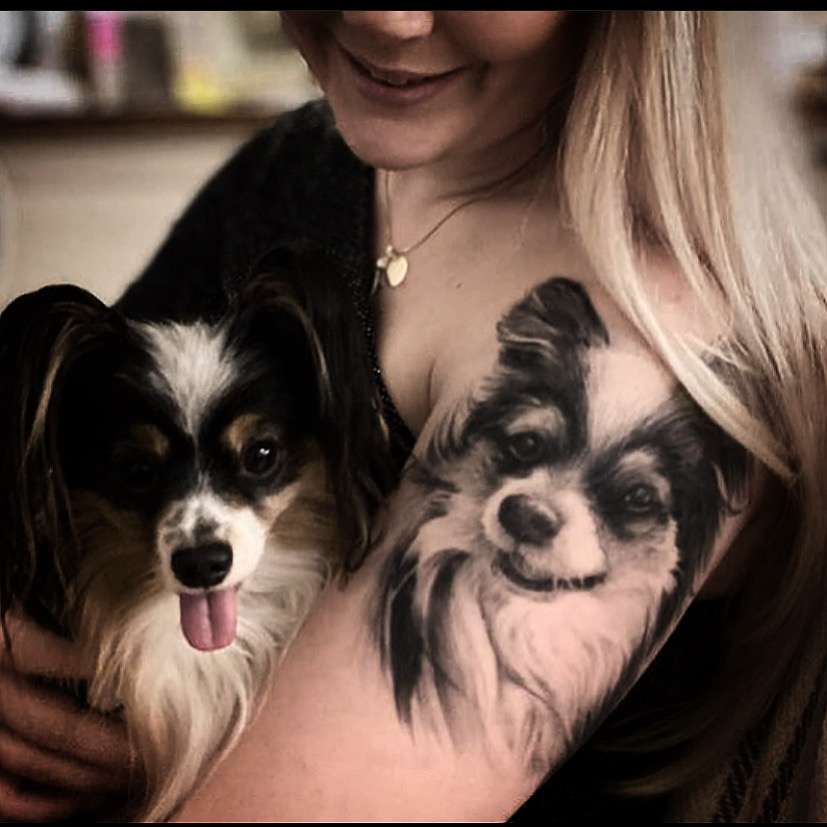
If the tattoo is based on your own pet, the reference quality matters a lot. Not because the image needs to be professionally taken, but because certain things must be visible. Clear eyes, readable facial planes, and natural lighting make a major difference. Blurry phone photos can still have emotional value, but they often need support from other images to build the portrait properly.
For wild animals, the question is slightly different. Then the focus is usually less about exact identity and more about mood, symbolism, and power. A lion can represent protection. A raven can suggest intelligence, mystery, or a darker narrative. A bear can feel grounded and ancient. The species matters, but the expression matters more.
The strongest starting point is often a mix of emotional meaning and visual strength. If an image matters deeply to you but does not translate well as a tattoo, it may still inspire the final design rather than dictate it exactly.
Expression is everything
Most people connect with the eyes first. That makes expression one of the most important parts of djurporträtt tatuering realism. A calm stare, alert tension, grief, loyalty, aggression, or curiosity can completely change the emotional weight of the tattoo.
This is especially true with pets. A technically accurate dog portrait can still feel wrong if the expression is generic. The goal is not just to tattoo a dog. It is to tattoo your dog, with the character you recognize instantly.
Placement changes the entire piece
Placement is not just a practical choice. It changes how realism reads.
Arms work well for portraits that need to be seen often and read clearly at a medium distance. Thighs allow more detail and larger compositions. The chest can create a strong personal feel, especially for memorial work, but the natural movement of the body has to be respected. Ribs and some curved areas can absolutely hold realism, though they demand smarter composition and a client who understands that discomfort may affect session length.
For larger work, a single animal portrait can become much stronger when it is part of a broader narrative. A wolf portrait framed by dark forest atmosphere, or a stag integrated into a black and grey sleeve, often has more longevity than a floating head placed without context. It feels designed rather than inserted.
Size matters more than most people expect
A common mistake is trying to fit too much realism into too little space. Tiny portraits may look impressive fresh, but realism needs room to age well. Eyes, fur direction, highlights, and subtle shadow transitions all need enough space to stay readable over time.
That does not mean every animal portrait has to be huge. It means the level of detail should match the scale. If the goal is emotional presence and longevity, giving the design enough room is one of the smartest choices you can make.
Black and grey realism gives animal portraits longevity
There is a reason black and grey remains such a strong choice for animal realism. It strips the image down to light, shadow, and structure. That can create a more timeless look, especially for clients who want something serious, personal, and less trend-driven.
Black and grey also works beautifully with darker themes and natural elements. Skulls, forests, Nordic textures, stormy backgrounds, or cinematic shadows can support an animal portrait without overpowering it. When done well, these additions create atmosphere rather than distraction.
That said, more detail is not always better. Some portraits benefit from open skin, softer fades, and restraint. Realism should feel alive, not overworked.
When a realistic animal portrait should be part of a larger story
Some tattoos are strongest when the portrait stands alone. Others need context.
If the animal represents a personal turning point, family bond, survival, heritage, or a darker inner theme, building a larger composition often creates a deeper result. A raven may sit naturally within mythology-inspired imagery. A dog portrait might pair with a landscape, a meaningful object, or subtle memorial elements. A horse could be framed by motion, dust, or dramatic negative space rather than decorative filler.
This is where collaboration matters. The best custom tattoos do not force symbolism into the design, but they also do not ignore it. If there is a story behind the tattoo, the composition should carry that story with control.
What to think about before booking
Before committing to a realistic animal portrait, it helps to be honest about what matters most to you. Is it exact likeness? Is it a dark, powerful mood? Is it memorial value? Is it part of a sleeve or a standalone piece?
Those priorities affect everything from reference choice to placement and scale. They also shape the design process. A client who wants a faithful pet portrait needs a different approach than someone who wants a wolf representing instinct and protection.
It is also worth thinking long term. Ask yourself how visible you want the piece to be, whether you may build around it later, and whether your chosen size gives the portrait enough room to stay strong over time. The right tattoo does not just look good in the first week. It continues to read clearly and feel personal years from now.
In a studio like Unikum Tattoo in Gothenburg, the strongest realism work usually starts with that kind of clarity – not with a rushed image and a vague idea, but with a real conversation about meaning, placement, and visual impact.
Djurporträtt tatuering realism is personal by nature
Animal portraits connect so strongly because they sit somewhere between realism and emotion. You are not choosing an abstract motif. You are choosing presence. That is why these tattoos deserve patience, strong references, and an artist who knows how to build more than surface detail.
If the design captures the right expression, fits the body properly, and leaves enough room for the realism to breathe, the result can feel less like an image and more like a memory made permanent.
The best animal portraits do not shout for attention. They hold it quietly, the same way a meaningful presence always does.