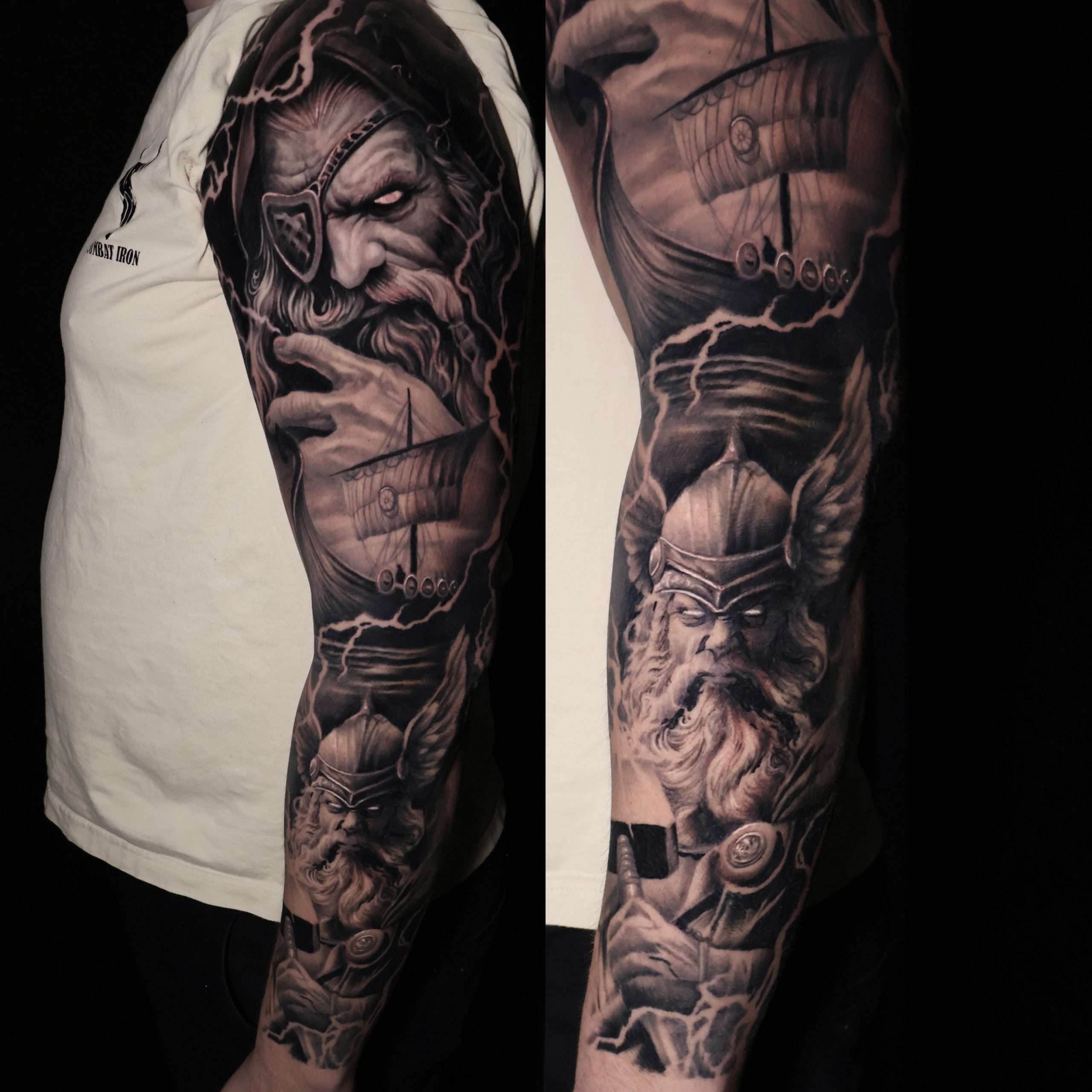
A good norse mythology sleeve tattoo should feel like a world wrapped around the arm, not a pile of Viking symbols fighting for space. That is where many sleeves go wrong. The idea is strong, but the composition is weak. If you want something that still looks powerful years from now, the mythology matters, but the design decisions matter just as much.
For a sleeve, Norse mythology works best when it is treated as a story rather than a mood board. The gods, beasts, runes, weapons, and landscapes all carry weight. When they are chosen with intention and built into one flowing concept, the result feels personal and complete. When they are picked only because they look cool, the tattoo can lose depth fast.
What makes a norse mythology sleeve tattoo work
The strongest sleeves usually have one clear anchor. That could be Odin, Fenrir, Yggdrasil, a Valkyrie, or a scene tied to fate, war, sacrifice, or transformation. Once that central idea is set, the rest of the sleeve can support it instead of competing with it.
That matters even more in black and grey realism. A sleeve with too many equal focal points can get noisy. You want contrast, breathing room, and a sense of movement from shoulder to wrist. Mythology gives you a lot to work with, but the art still needs hierarchy.
A sleeve also needs to fit the body. The upper arm can carry a strong portrait or major figure. The forearm often works well for vertical elements like spears, branches, wolves, ravens, or serpent forms. The elbow and inner arm need special attention because those areas can distort details or heal differently. A custom design should account for all of that from the start.
Choosing the right story for your sleeve
A norse mythology sleeve tattoo does not need to retell every myth. In fact, it is usually better when it does not. The most effective approach is to choose a theme that means something to you and build around that.
If you are drawn to Odin, for example, you are not only choosing a recognizable figure. You are stepping into themes of sacrifice, wisdom, obsession, and vision. His ravens can become more than decorative fillers. His missing eye can become a symbol of what knowledge costs. Gungnir, the spear, can add structure to the composition while reinforcing the story.
Thor brings a different energy. A sleeve built around Thor tends to feel heavier, more forceful, and more direct. Mjolnir is iconic, but if that is the only symbol used, the sleeve can feel predictable. Adding storm texture, shattered stone, or Midgard Serpent references can push it into something more layered.
Fenrir, Jormungandr, and Hel all offer darker directions. These subjects often appeal to people who want something more brutal, haunted, or primal. They also translate beautifully into realism because texture matters so much – fur, scales, bone, weather, shadow. If your taste leans darker, mythology gives you a chance to create something dramatic without losing meaning.
Then there is Yggdrasil, which can be one of the smartest structural choices for a sleeve. The world tree naturally connects different zones of the arm. Roots can wrap the forearm, branches can open across the upper arm, and figures or symbols can live within that framework. It gives the sleeve flow before you even start adding detail.
Symbols are powerful, but context matters
A common mistake with Norse-themed tattoos is relying too heavily on isolated symbols. Vegvisir, runes, ravens, Mjolnir, and knotwork all show up often. Some of them are visually strong, but not all of them belong to the same historical or mythological context in the way people assume.
That does not mean you cannot use them. It means you should know why they are there. If a symbol has personal meaning for you, that is a valid reason. But if your goal is a sleeve that feels intentional rather than generic, research and artistic interpretation matter.
Runes are a good example. They can add sharp graphic contrast to a realism sleeve, but they should not be treated like random decoration. Placement, scale, and meaning all affect whether they feel integrated or pasted on top. In many cases, fewer runes with stronger purpose work better than covering the arm in text that nobody can read.
The same goes for knotwork and ornamental patterning. Used well, they can frame portraits or create transitions between major elements. Used badly, they flatten the sleeve and make everything feel repetitive. Realism needs space to breathe.
Black and grey realism suits Norse mythology well
There is a reason Norse themes translate so well into black and grey realism. The mythology already carries atmosphere – mist, stone, forests, storms, old weapons, animal presence, death, and ritual. That visual language does not need bright color to feel intense. Often, black and grey gives it more gravity.
Realism also helps separate a custom sleeve from more standard Viking-inspired tattooing. Instead of relying only on outlines and symbols, you can build mood through texture, light, and expression. Odin can look aged, burdened, and intelligent rather than just stern. A wolf can feel alive instead of emblematic. A raven can read like a real creature with mythic weight.
That said, realism demands restraint. If every section is rendered at maximum detail, the sleeve can become visually heavy. Skin breaks, softer background transitions, and controlled contrast are what keep the piece readable from a distance and rewarding up close.
Planning the sleeve as one composition
Sleeves fail when they are built in fragments. One tattoo on the upper arm, another on the forearm, a filler idea later – that usually leads to compromise. With mythology, this can be even more obvious because disconnected symbols do not automatically create a coherent narrative.
A better approach is to plan the entire arm before the first session. Even if the sleeve is completed over multiple appointments, the concept should already exist as a whole. That allows the main focal points, transitions, and dark-to-light balance to be intentional.
This is especially important if you want multiple characters or scenes. Odin, wolves, ravens, and Yggdrasil can absolutely live together, but they need spacing and flow. One element should lead into the next. Background should support the story instead of swallowing it. The arm should feel wrapped, not patched.
If you already have existing tattoos, it depends on what they are and where they sit. Sometimes a Norse mythology sleeve can be designed to incorporate them. Sometimes cover-up or reworking is the better path. The honest answer is that not every old piece fits naturally into a mythology-driven realism sleeve, and forcing it can weaken the final result.
Personal meaning makes the design stronger
The best mythological tattoos are not copied from old imagery word for word. They are translated into something personal. That is where custom work matters most.
Maybe you connect with Tyr because of duty and sacrifice. Maybe Ragnarok speaks to a period of collapse and rebuilding in your own life. Maybe ravens, wolves, or the world tree tie into family, memory, instinct, or growth. Those meanings can guide the design in subtle ways without turning the tattoo into a literal explanation of your life.
This is also what keeps the sleeve from feeling trend-driven. Viking imagery is popular, but popularity alone does not make a tattoo timeless. A sleeve lasts because the concept is solid, the execution is strong, and the symbolism still means something when the trend cycle moves on.
What to think about before you book
Before starting a sleeve, it helps to gather references for mood, not just for exact images. Show the kind of atmosphere you want – darker, more sacred, more violent, more calm, more ancient. That gives the artist something more useful than a folder full of copied tattoos.
You should also be clear about how visible and intense you want the piece to be. A full wrap with heavy contrast creates a different presence than a more open sleeve with softer transitions. Neither is automatically better. It depends on your style, your skin, and how much visual weight you want on the arm.
If you are serious about a custom norse mythology sleeve tattoo, the process should be collaborative. A strong artist will not just paste together symbols. They will help shape your idea into a composition that fits your arm, your taste, and the kind of work that ages well. If you want to start that conversation, you can reach out through https://www.dimitrissteiger.se/ with your idea and references.
A sleeve like this should feel earned – not because it has to be complicated, but because it should say something real every time you look at it.