Choosing animal tattoos, domestic and wild
Domestic animals tend to carry intimacy. Wild animals often carry force. That is not a fixed rule, but it is a useful starting point when building a concept.
A domestic animal tattoo often begins with a real relationship. Dogs are loyalty, companionship, and protection, but they can also represent a specific chapter of life. Cats can suggest independence, mystery, comfort, or a quiet kind of resilience. Horses can move in both directions. They can feel personal and familiar, but they also hold power, beauty, and movement in a way that pushes beyond the purely domestic.
Wild animals usually bring a broader symbolic charge. Wolves can read as family, survival, instinct, or the tension between solitude and belonging. Bears often speak through strength and grounded presence. Lions and tigers carry authority, danger, pride, and control. Ravens, crows, and owls move into darker territory – intelligence, omen, death, wisdom, memory, or transformation.
The right direction depends on what you want the tattoo to do. If the goal is remembrance, realism and likeness may matter most. If the goal is atmosphere or symbolism, composition matters just as much as species. A technically strong tattoo needs more than a beautiful animal. It needs a reason to exist on the body.
Domestic animal tattoos and personal memory
When someone chooses a domestic animal, the emotional weight is often already there. The challenge is translating that into a tattoo that feels timeless instead of sentimental in a rushed way.
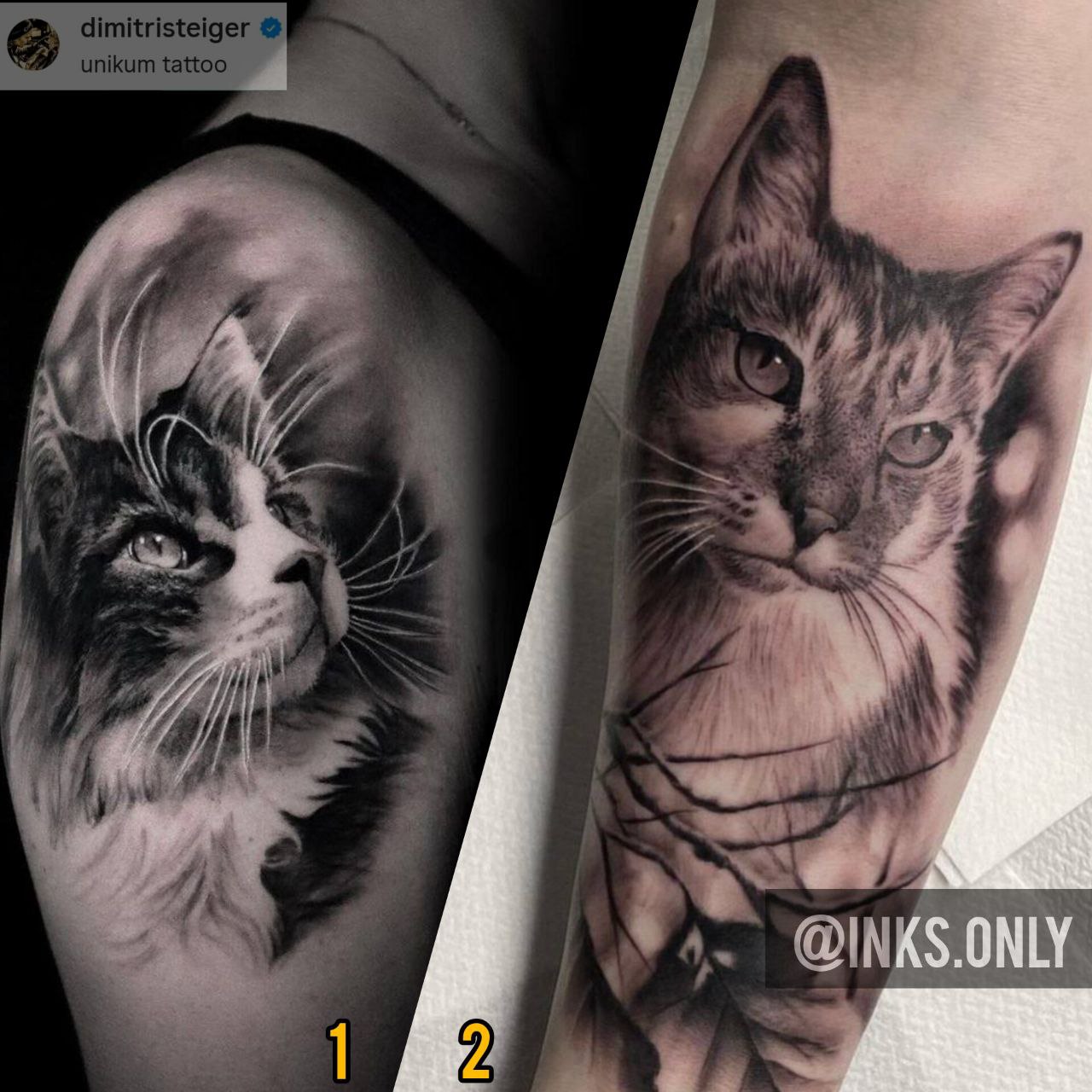
Portrait tattoos are one path, but not the only one. A realistic dog portrait can be incredibly powerful when the expression, eye detail, and fur texture are handled with precision. But sometimes a more complete design says more. A sleeping cat framed by shadows, flowers, or a favorite blanket texture can capture the feeling of home better than a face alone. A horse in motion can reflect not just the animal, but your history with it.
This is where custom work matters. A generic pet tattoo can feel flat because it records features without capturing presence. The strongest black and grey realism pieces pay attention to expression, posture, light, and mood. A slight tilt of the head or the way the eyes catch contrast can completely change the result.
Placement matters too. Smaller memorial tattoos can work on the inner forearm, calf, or upper arm, but if you want realism with depth, skin space helps. More room allows subtle transitions, stronger fur detail, and a design that breathes instead of feeling cramped.
Wild animal tattoos and symbolic power
Wild animal tattoos often start with visual impact, but they last because of meaning. A roaring predator can look impressive, but if that is the entire concept, the tattoo may lose its force over time. Strong imagery needs a deeper connection.
Ask what draws you to the animal before asking how it should look. Is it the aggression of a tiger, or its control? Is it the solitude of a wolf, or its loyalty to the pack? Is the raven about darkness, intelligence, myth, or death? The same animal can tell completely different stories depending on the composition.
This is especially important in large-scale work. A sleeve or backpiece gives you space to create a narrative instead of a single isolated image. A bear emerging from dark forest textures tells a different story than a clean frontal portrait. A stag combined with fog, antlers, stone, or Nordic-inspired elements can feel ancient and grounded rather than decorative.
There is also a trade-off between realism and interpretation. Pure realism creates presence. Stylized realism creates atmosphere. Neither is automatically better. It depends on whether you want the tattoo to feel like a living encounter or a constructed world.
Black and grey realism gives animal tattoos depth
Animal tattoos work especially well in black and grey because texture, light, and anatomy carry so much of the image. Fur, feathers, skin folds, horns, whiskers, and eyes all depend on contrast. When done well, black and grey realism creates a sense of life without needing color to do the work.
This style also ages in a way many clients appreciate, especially in larger pieces designed with enough contrast and open skin flow. Dark backgrounds, soft transitions, and controlled highlights can add drama, but they need balance. Too much detail packed into a small area can blur the read of the tattoo over time.
That is why composition should come before micro-detail. An eye-catching wolf is not just about individual hairs. It is about where the head turns, how shadows shape the face, and how the tattoo fits the muscle and movement of the body. On a sleeve, for example, the animal should feel integrated into the arm rather than pasted onto it.
For clients drawn to darker themes, black and grey realism also gives room for mood. Animals can be combined with forest elements, smoke, weather, skulls, ruins, mythology, or horror references without losing elegance. The key is restraint. A strong concept feels intentional, not overloaded.
Placement changes the meaning
The same animal can feel calm, aggressive, private, or monumental depending on where it sits.
Forearms give visibility and usually suit portraits or medium-scale concepts with a clear focal point. Upper arms and thighs offer more room for movement and softer transitions. Chests and ribs can feel more intimate, especially for memorial tattoos or pieces with emotional weight. Backpieces are ideal when the idea needs scale, atmosphere, and storytelling.
If you are choosing between a domestic and wild animal theme, placement can help decide. A pet portrait often works best where you can see it and connect with it. A large wild animal composition may need more body space to express energy properly. There is no universal rule here. The right choice depends on whether the tattoo is meant to be personal and close, or more dramatic and expansive.
Pain and healing are part of that conversation too. Ribs, sternum, knee, and certain inner areas are more demanding. That does not mean you should avoid them, only that design ambition and session planning should be realistic.
How to make the design feel like yours
The easiest mistake with animal tattoos is choosing a powerful image that could belong to anyone. The fix is not making it more complicated. The fix is making it more specific.
That specificity can come from memory, symbolism, or visual world-building. A dog portrait can include the expression you knew best, not just the most flattering photo. A raven tattoo can borrow from mythology, winter landscapes, or personal references that shift the feeling away from standard imagery. A wolf sleeve can be built around isolation, ancestry, or survival depending on what you want the story to hold.
Reference images help, but they should start the conversation, not end it. Good custom tattooing is not about copying one perfect picture. It is about building a piece that works for your body, your style, and the emotional weight behind the subject.
That is especially true with large black and grey realism projects. The best results come from collaboration. You bring the meaning, the animal, the atmosphere, the personal connection. The artist shapes that into something that reads well from a distance, rewards close viewing, and still feels right years later.
Animal tattoos, domestic and wild, endure because they connect instinct with identity. If you choose the subject carefully and give the design enough room to become personal, the tattoo stops being just an image. It becomes a presence you carry.