
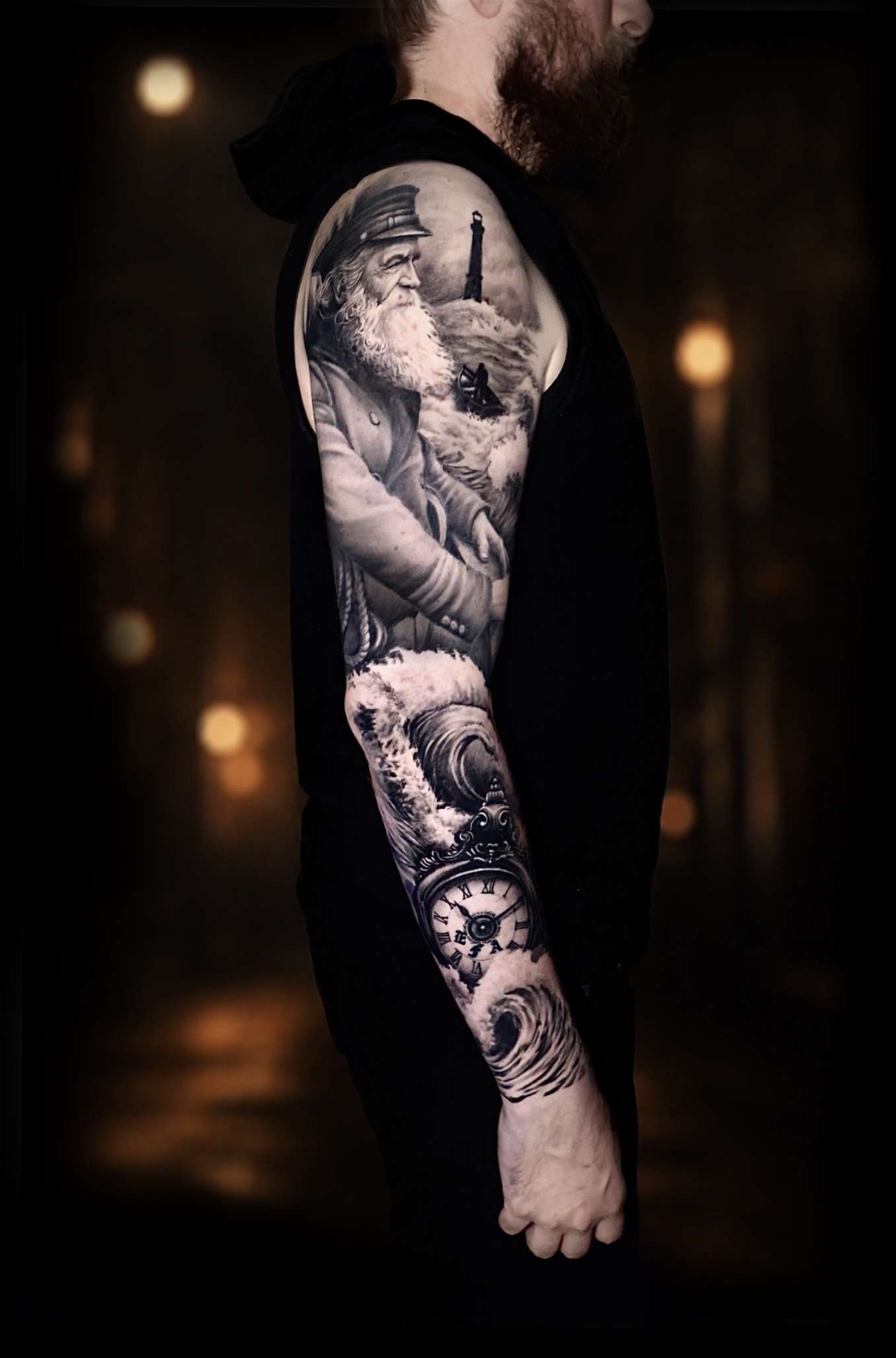
A fresh sleeve, backpiece, or large realism tattoo can look finished when you leave the studio, but the skin has only started its work. This large tattoo healing timeline guide helps you understand what is normal, what can affect the result, and why patience matters as much as the design itself. Large custom work is an investment in your story, and careful healing protects every detail.
A tattoo does not heal in a straight line. One area may peel while another still feels tender. A dense black section may look different from soft grey shading as it settles. Placement, session length, your skin, your routine, and the aftercare method advised by your artist all influence the pace.
The first 24 hours: Protect the fresh work
Right after a large tattoo session, the area may feel warm, sore, and tight. Some redness, mild swelling, and a small amount of clear fluid mixed with ink are expected. On a large piece, these reactions can be more noticeable simply because more skin has been worked.
Keep the covering on for the amount of time your artist recommends. This is not the moment to follow a random routine from social media. A traditional wrap and an adhesive healing film have different instructions, and both should be handled according to the advice you received for your specific tattoo and skin.
Once it is time to clean the tattoo, wash your hands first. Use lukewarm water and a mild, fragrance-free cleanser, then gently rinse away plasma, excess ink, and ointment residue. Pat it dry with a clean paper towel. Do not scrub it, rub it with a bath towel, or use anything abrasive.
A clean tattoo does not need to be smothered. If your artist has advised a healing product, use only a very thin layer. Heavy application can trap moisture and make the skin unhappy. Loose, clean clothing is usually the best choice, especially for a backpiece, thigh piece, or sleeve that may otherwise rub against fabric.
Days 2 to 6: The uncomfortable stage
The first several days often test your discipline. The tattoo may feel warm, dry, tender, and itchy. It can also release a little more fluid, particularly after a long session with saturated black and grey work. Keep up the gentle wash-and-dry routine, and follow the product instructions given by your artist.
Avoid soaking the tattoo. That means no swimming pools, hot tubs, baths, or long sea swims while the skin is open and healing. Quick showers are fine, but do not let hot water pound directly onto the area for several minutes. Heavy sweating and friction can also be a problem, so adjust training, work gear, and clothing when necessary.
Sleep deserves more attention than it usually gets. Fresh tattoos can stick to bedding or become irritated by pressure and heat. Use clean sheets, choose breathable clothing, and avoid sleeping directly on the tattoo when you can. For a large backpiece, that may take planning, but it is worth it.
Large tattoo healing timeline guide: Week 1
By the end of the first week, many large tattoos begin to look less vivid than they did on day one. This is normal. The bright, fresh appearance changes as the top layer of skin starts repairing itself. You may see a thin, glossy layer, light scabbing in more heavily worked areas, or the beginning of peeling.
Do not pick at flakes or scabs, even if they seem ready to come off. Pulling at healing skin can remove pigment before it has settled and may create uneven areas that need attention later. Let the skin release naturally. Your job is to keep it clean, lightly moisturized if instructed, and protected from unnecessary contact.
Large-scale tattoos often heal in patches. A forearm may peel before the upper arm. The center of a backpiece may remain tender longer than the edges. This does not automatically mean something is wrong. It reflects how different areas were tattooed, how much ink saturation they received, and how much movement or friction they experience throughout the day.
Weeks 2 and 3: Peeling, itching, and the cloudy phase
This is the stage when a tattoo can look temporarily dull, dry, or cloudy. Fine flakes may come away during washing, and the itching can become intense. It is common for clients to worry that the realism has faded, especially where subtle grey tones and smooth transitions were used. Usually, the tattoo is simply healing beneath a thin layer of renewing skin.
Resist the urge to scratch. A light tap near the area, cool air, or a brief clean rinse can be more helpful than dragging your nails across the tattoo. Keep moisturizing modestly. Skin that feels tight may need a small amount of approved lotion, but skin that looks shiny and over-saturated may need less.
This is also when day-to-day habits show their effect. Constant rubbing from a watch, waistband, bra strap, work uniform, or gym equipment can slow down recovery. Sun exposure is another major concern. A healing tattoo should stay out of direct sun. Once it is fully healed, sunscreen remains one of the simplest ways to preserve contrast in black and grey work over time.
Weeks 4 to 6: It may look healed before it is fully healed
After about a month, the surface often appears calm. Peeling has usually stopped, tenderness is gone, and the tattoo starts looking more like the piece you imagined. But deeper layers of skin can still be recovering. Treat this period as a transition, not a finish line.
Continue avoiding prolonged soaking until your artist confirms it is appropriate, especially if any small areas remain dry, raised, or flaky. Maintain normal hygiene, protect the piece from sun, and use a simple moisturizer when the skin needs it. The goal is not to constantly inspect it. The goal is to let it settle.
For large projects completed over multiple sessions, healing also affects scheduling. A nearby area may need time to calm down before the next session, while a separate section can sometimes be tattooed sooner. There is no useful one-size-fits-all rule. Your artist will consider placement, skin condition, design flow, and how your body responded to the previous appointment.
What is normal, and when to ask for help
Mild redness, warmth, swelling, dryness, itching, and peeling are common early in the process. A tattoo can also feel more sensitive in areas with thin skin, frequent movement, or close contact with clothing. The trade-off with a detailed large-scale piece is that it asks more of your body than a small tattoo does, so it deserves more care and observation.
However, worsening pain, redness that spreads well beyond the tattoo, significant swelling, fever, foul-smelling discharge, or thick yellow-green fluid are not typical healing signs. Contact a medical professional promptly if you experience these symptoms. If you are uncertain about a normal aftercare issue, speak with your tattoo artist as well. Early questions are always better than waiting and guessing.
Healing a large custom tattoo without compromising the result
The best aftercare routine is usually boring: clean hands, gentle washing, light product use, clean clothing, no picking, no soaking, and no sun. The difficult part is consistency. A large tattoo may take weeks to fully settle, and a sleeve or backpiece may require several sessions across a longer period. That time is part of the process, not an interruption to it.
Your body is carrying a custom piece built around your ideas, whether it is a wolf, a Viking composition, a dark cinematic scene, or a personal story translated into black and grey realism. Give it the quiet recovery it needs. When the skin has fully settled, the detail, contrast, and intention behind the work have the best chance to speak for themselves.