
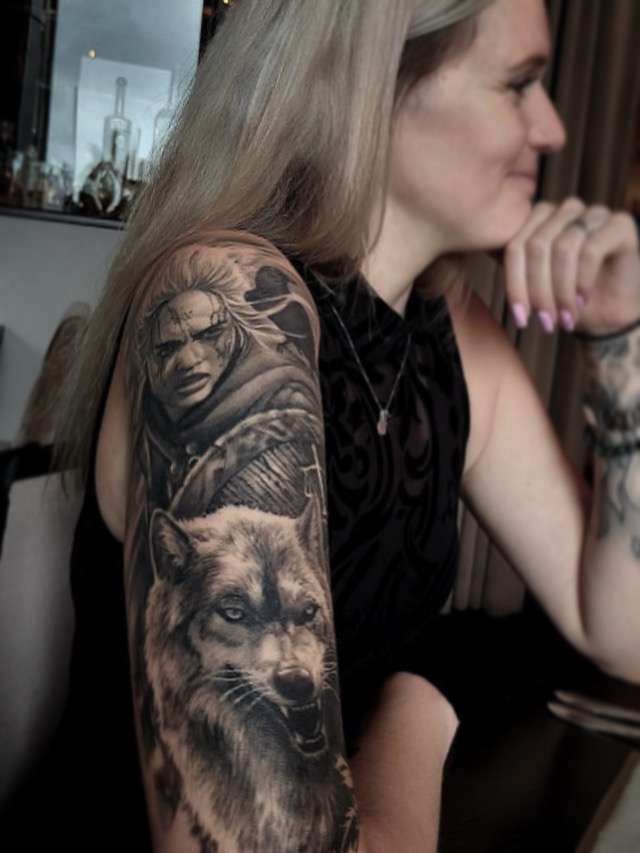
You do not really see a realism tattoo on the day it is finished. You see the fresh version – slightly swollen, extra dark in places, and covered by the shine of ointment and trauma. A true guide to realistic tattoo healing starts there, with the understanding that healing is part of the artwork. If you want crisp detail, smooth black and grey transitions, and a piece that still reads clearly years from now, the way it heals matters just as much as the session itself.
Realism is less forgiving than simpler tattoo styles. A bold traditional design can often hold its structure even when healing is less than ideal because it relies on strong outlines and flatter fields of color or black. Black and grey realism is different. It depends on subtle value shifts, controlled softness, texture, and depth. That means over-moisturizing, picking, sun exposure, friction, or simply misreading what normal healing looks like can affect the final result more than many people expect.
Why realistic tattoo healing is different
When a tattoo is built around portraits, animals, Viking subjects, dark imagery, or narrative scenes, the impact comes from precision. The eye reads tiny differences in shadow, skin breaks, highlights, and contrast. During healing, some of that fresh intensity settles. This is normal. A healed realism tattoo should not look raw and overly saturated forever. It should look settled into the skin.
That is why realistic tattoo healing can feel mentally harder than people expect, especially for first-time clients. One day the tattoo looks perfect, then it gets cloudy, then flaky, then a little dull, then sharper again. None of that automatically means something went wrong. Skin is rebuilding. Ink is settling. What you are watching is not the art disappearing. You are watching your body finish the job.
Large-scale work adds another layer. A sleeve, chest panel, or backpiece often heals in sections, not as one simple event. Different areas of the body can react differently based on movement, clothing friction, sleep position, and skin type. The soft inner arm does not heal exactly like the outer forearm. The ribs do not behave like the calf. That is why aftercare should be consistent, but expectations should stay flexible.
A realistic tattoo healing timeline
The first 24 to 48 hours are about protection. Your tattoo is an open wound, even if it already looks impressive. Some redness, warmth, plasma, and light bleeding are normal. This stage is not glamorous, but it is important. Clean hands, clean bedding, and following the aftercare instructions you were given matter more than buying ten products.
Days three through seven are often when clients start to worry for no reason. The tattoo can begin to feel tight, dry, or slightly itchy. Some areas may look milky or less defined. You may see flaking. With realism, this can be uncomfortable because fine details can seem muted under that healing layer. Leave it alone. Picking flakes because you want the image to look fresh again is one of the fastest ways to create patchy healing.
Around week two, the surface usually looks calmer. Much of the peeling has passed, but the tattoo may still seem a little flat or cloudy. This stage is easy to misjudge. People think the tattoo is healed because it is no longer dramatic on the surface. In reality, deeper healing is still happening.
By weeks three to six, the skin usually starts to settle more fully. Contrast becomes easier to read. The piece looks more like a tattoo and less like an injury. Even then, full healing depends on placement, size, your immune response, and how carefully you handled aftercare. Bigger, more detailed realism pieces can take longer to fully calm down.
How to care for detail without overworking the skin
The best aftercare for realism is usually simple. Wash gently. Pat dry. Use a light layer of the recommended product. Keep the tattoo clean and avoid soaking it. That sounds basic because it is. Problems often start when people do too much.
Heavy creams can suffocate the area and make the tattoo look soggy. Too little moisture can lead to cracking and irritation. There is a balance, and it depends a little on your skin. The goal is not to keep the tattoo shiny all day. The goal is to support healing without turning the area into a sticky, over-softened mess.
Friction is another detail people underestimate. Fresh realism on the thigh under tight denim, on the ribs under rough fabric, or on the forearm rubbing against gym equipment is not ideal. The tattoo does not need babying forever, but in the early healing phase, repeated rubbing can irritate the surface and slow things down.
Sweat is one of those it depends situations. Light daily movement is usually fine if your artist says so, but hard training, hot yoga, long runs, and anything that leaves the tattoo trapped under sweat for extended periods can create problems. The same goes for swimming, saunas, and long hot showers. If you spent hours creating a custom piece, it makes sense to give it a short window of real care.
What normal healing looks like and what does not
A good guide to realistic tattoo healing should be honest about the line between normal and not normal. Normal includes redness in the beginning, tenderness, itching, flaking, and temporary dullness. Some spots may heal a little slower than others. On larger pieces, small variations across the tattoo are common.
What is not normal is increasing redness after the first days, intense heat, spreading swelling, pus, severe pain, or a smell coming from the area. Those signs deserve attention. The same applies to a rash or a reaction that keeps escalating rather than calming down.
There is also a middle ground that confuses clients: minor unevenness. In realism tattoos, especially large black and grey work, a touch-up can sometimes be part of the process. That does not mean the tattoo failed. Skin is not paper. Different zones hold pigment differently, and some placements are simply more stubborn. The goal is a strong healed result, not the fantasy that every millimeter behaves identically on the first pass.
How black and grey realism settles over time
Fresh black and grey realism usually looks stronger than healed black and grey realism. That is expected. Once the skin closes and the trauma fades, the image softens slightly into its true healed character. Good realism should still have depth, readable contrast, and clean transitions, but it will not have that fresh, wet intensity forever.
This is where technical tattooing and good healing meet. If the design has a strong value structure from the start, it can heal beautifully and age with character. If the contrast is too weak, poor healing habits can make it fade into something flatter and less readable much faster. That is one reason custom realism work needs planning, not just a cool reference photo.
Sun is one of the biggest long-term threats. Once the tattoo is healed, daily sun protection helps preserve subtle shading and cleaner contrast. This matters for all tattoos, but it matters even more for realism because that style lives and dies on nuance. A wolf portrait, a face, or a dark cinematic scene loses impact when repeated sun exposure softens the values too aggressively.
The mindset that helps most during healing
The hardest part of healing is often not physical. It is psychological. Clients stare at the tattoo several times a day, compare it to the fresh photo, panic during the flaky stage, and assume every temporary change is permanent. That reaction is understandable, especially when the tattoo means something personal.
But healing asks for patience. Trust the process, follow the aftercare you were given, and give the skin time to settle before judging the final result. A realism tattoo is built in layers of value and detail, and your body needs time to hold those layers properly.
If you are planning a custom black and grey piece, think of healing as the final stage of craftsmanship. The session creates the tattoo, but the healing period protects it. Respect that part, and the artwork has the best chance to look sharp, balanced, and true to the idea that brought you in the first place.
The best healed tattoos are not just well tattooed – they are well cared for when it counts.