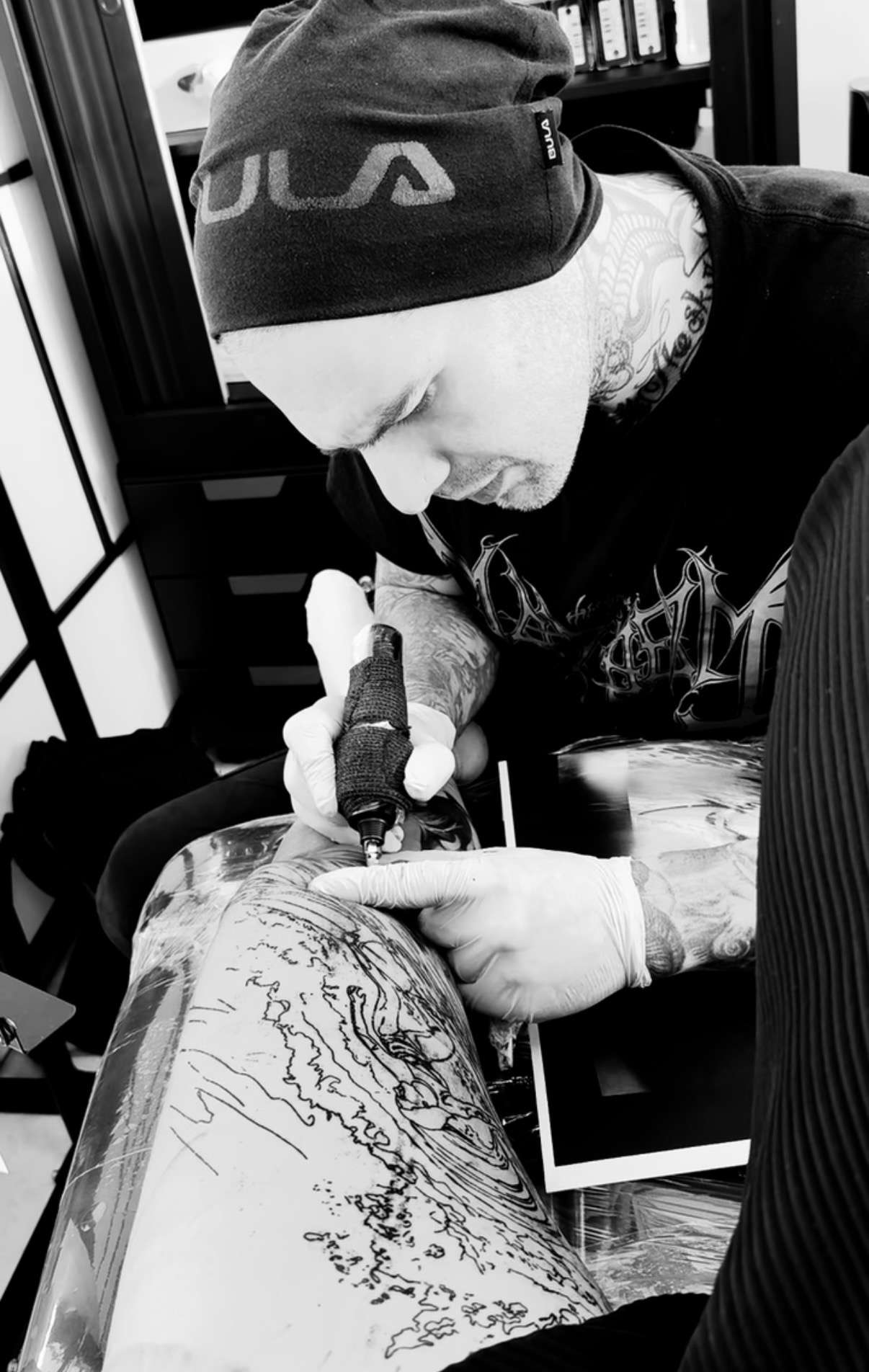
A long tattoo session usually feels less like a single moment of pain and more like a test of focus. The first hour can feel easy. By hour three, your body starts negotiating. By hour six, every small movement, missed meal, or bad night of sleep suddenly matters. If you’re wondering how to sit for long tattoo sessions, the answer is not to just “tough it out.” Good preparation changes the entire experience.
That matters even more with large black and grey realism work, sleeves, backpieces, and detailed custom pieces. These projects are built slowly, with intention. The better you sit, the better your artist can stay consistent with detail, contrast, and flow.
How to sit for long tattoo sessions starts before the appointment
Your session doesn’t begin when you walk into the studio. It begins the day before.
Sleep is the first thing people underestimate. If you show up tired, your pain tolerance drops, your patience gets thinner, and your body feels the stress earlier. You do not need a perfect night of sleep, but you do want a real one. If your appointment is for a big piece, treat the night before like preparation for something physically demanding, because that’s what it is.
Food matters just as much. Arriving on an empty stomach is one of the fastest ways to make a long session feel worse than it needs to. Eat a solid meal with protein, slow carbs, and water before you leave. Not junk food, not just coffee, and definitely not nothing. A steady energy level is far better than a sugar spike followed by a crash.
Hydration helps too, but this is where balance matters. Drink enough water in the day leading up to the appointment, but don’t flood yourself right before sitting down if it means constant bathroom breaks. Long sessions already have enough interruptions.
It also helps to wear the right clothes. Think practical, not stylish. If you’re getting tattooed on the arm, leg, ribs, thigh, or back, wear something that gives easy access and lets you stay in position without feeling twisted up or restricted. Comfortable clothing reduces fidgeting, and less fidgeting gives the artist a steadier canvas.
What makes long sessions hard
Pain is part of it, but pain is not the whole story.
A long tattoo session becomes difficult because your body gets tired of staying still. Muscles tighten. Your neck starts working harder than it should. Your breathing gets shallow. Small irritations become bigger because they stack up. The sound of the machine, the pressure on one side of your body, the awkward angle of a wrist or shoulder – these things add up over time.
Placement changes everything. Sitting for six hours on an outer arm is very different from sitting for six hours on ribs, sternum, knee, spine, or inner bicep. That does not mean one person is “good” at tattoos and another isn’t. It means some areas are simply more demanding, and some sessions are tougher because of body position more than raw pain.
This is also why honesty matters. If you are struggling, say so before it becomes a bigger issue. An experienced artist would rather adjust your position early than have you suddenly hit a wall.
During the session, think steady rather than brave
The clients who sit best are usually not the ones pretending nothing hurts. They’re the ones who stay consistent.
Breathing is a big part of that. When pain spikes, most people tense up and hold their breath without realizing it. That tension travels through the body, and then holding still becomes harder. Slow breathing gives you something to control when the tattoo itself is uncomfortable. It sounds simple, but simple works.
Movement should be intentional. If you need to shift, ask first and do it clearly. Random reactions are much harder for an artist to work around than a short planned pause. You do not need to sit like a statue for every second, but you do need to be predictable.
Your mindset matters more than motivation quotes ever will. Don’t frame the session like a battle you need to win. That usually makes people tense and dramatic the moment it gets hard. Treat it more like endurance. One section at a time. One break at a time. One hour at a time.
Entertainment can help, but only if it actually calms you. Music, a podcast, or quiet conversation can make the time pass more easily. On the other hand, if your artist is working on highly detailed realism and needs concentration, there may be moments where less talking is simply better for the piece. That’s not distance. That’s focus.
Bring what helps you sit better
For a long session, the smartest setup is a simple one. Bring water, easy snacks, and whatever helps you stay calm without making you restless. Something salty, something with sugar, and something easy to eat during a short break usually works well.
Your phone charger is not a bad idea either. A dead phone at hour five can make time move very slowly.
Avoid anything that leaves you overstimulated. Too much caffeine can make you shaky. Drinking alcohol before a tattoo is a bad decision for obvious reasons. Showing up hungover is even worse. You want your body stable, not fighting to catch up.
Some people ask about numbing products. This depends on the person, the skin, and the area being tattooed. In some cases, they can help. In others, they can change how the skin reacts or create a different kind of discomfort later in the session. If you are considering anything like that, it should be discussed with your artist beforehand, not decided on your own the morning of the appointment.
How to sit for long tattoo sessions when pain builds up
Pain in a long session is rarely linear. Sometimes the first hour is sharp and annoying, then your body settles. Other times it starts manageable and gets harder later when swelling, sensitivity, and fatigue build.
When that happens, don’t panic and don’t make the session bigger in your head than it is. Focus on the next few minutes, not the next few hours. Ask for a short break if you need one. Eat something. Stretch carefully. Reset your breathing. Small corrections often do more than trying to mentally overpower the pain.
It also helps to accept that some moments are just rough. That’s normal. A large, detailed tattoo is not supposed to feel effortless. The goal is not zero discomfort. The goal is to stay steady enough that the work can be done properly.
There is also a limit. If your body is done, your body is done. Pushing past that point does not make you impressive. It can make you shaky, sore, and harder to tattoo well. Good artists think long-term. Protecting the quality of the piece is more important than squeezing out one extra hour for pride.
Recovery affects the next session too
If your project takes multiple sessions, how you recover after one appointment affects how you handle the next.
Eat after the session, drink water, and let your body come down properly. You may feel drained even if everything went smoothly. That’s normal. Large pieces take a lot out of you physically and mentally.
Aftercare matters for obvious healing reasons, but it also matters because poorly healed skin can make the next session more difficult. If the work is custom, detailed, and built to flow across a larger area, every session connects to the next. Taking care of the tattoo is part of taking care of the final result.
It’s also worth paying attention to what worked. Maybe you realized a bigger meal helped. Maybe you learned that a certain position bothers your lower back after two hours. Maybe morning appointments suit you better than late-day ones. The more you understand your own patterns, the easier future sessions become.
The best long sessions are collaborative
A strong tattoo session is not just about pain tolerance. It’s about trust, preparation, and communication.
If you’re investing in a meaningful custom piece, especially something large and detailed, sitting well is part of the process. It gives your artist the best chance to work with precision instead of constantly working around tension, fatigue, or avoidable problems. At a studio like Unikum Tattoo in Gothenburg, where custom black and grey realism is built around detail and story, that kind of collaboration makes a real difference.
You do not need to be fearless to sit well. You need to be prepared, honest, and willing to work with the process. That’s usually the difference between a session that feels chaotic and one that feels demanding but worth it.
If you’re planning a large piece, think of the sitting process as part of the artwork itself. The more respect you give it, the better the result will feel on the skin and years later.