What is black and grey realism tattoo style?
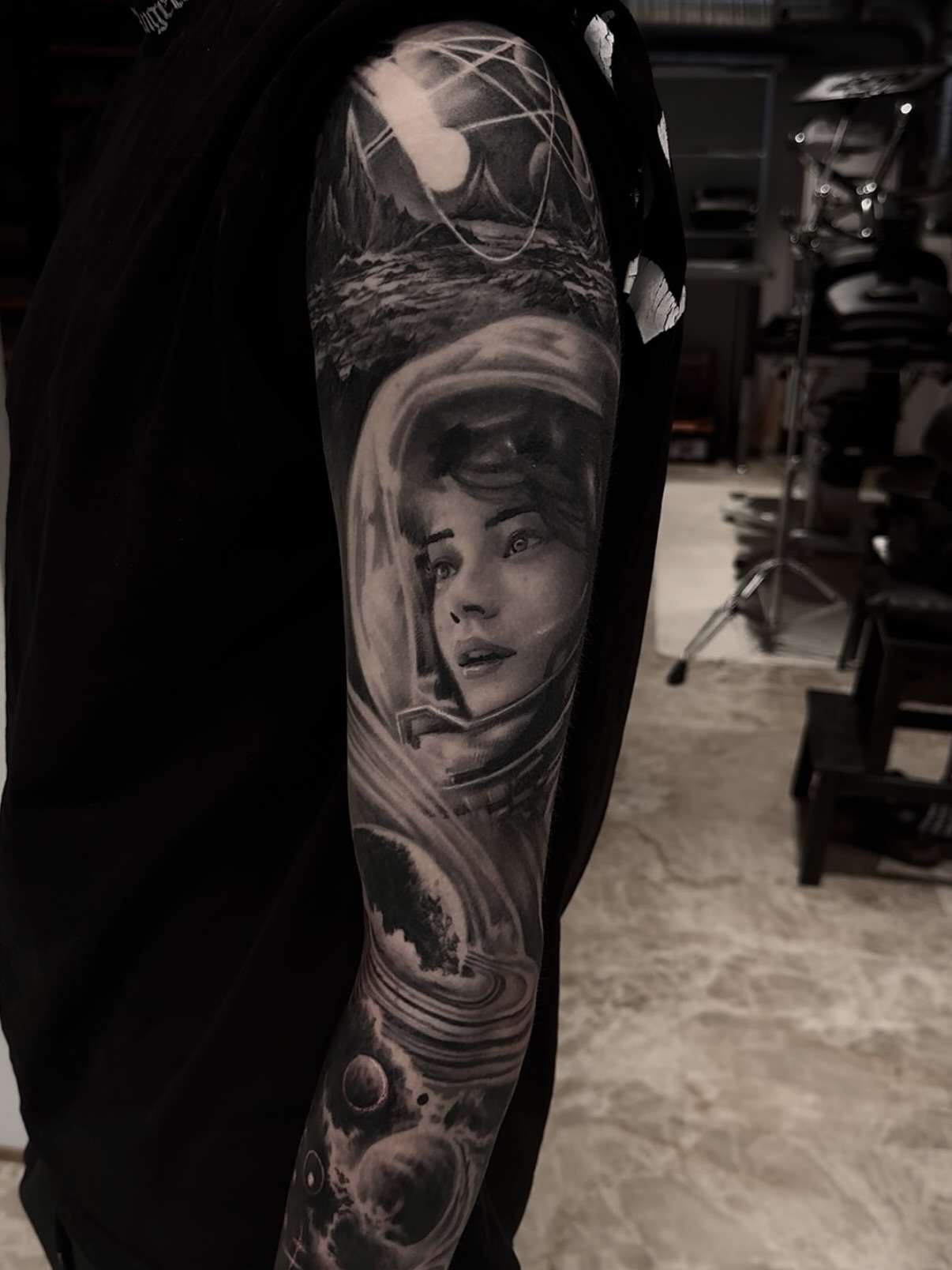
At its core, black and grey realism is about creating a realistic image through light and shadow. Instead of outlining everything heavily and filling it with flat tones, the artist builds form gradually. Soft transitions create skin, fur, smoke, stone, metal, or weathered surfaces. Darker areas push drama and structure. Mid-tones carry most of the realism. Open skin is often used as light, which is one reason this style can look so striking when it heals well.
The realism part matters. Not every black and grey tattoo is realism. Traditional black and grey work, illustrative work, fine line work, and Chicano-inspired lettering all use black and grey in different ways. Realism specifically aims for believable depth and texture. It can be photorealistic, but it does not have to copy a photo exactly. In many of the strongest pieces, realism is combined with artistic composition so the tattoo works on the body, not just on paper.
That is where custom design becomes important. A good realism tattoo is not only about the subject. It is about placement, flow, scale, and how separate elements connect into one clear visual story.
Why black and grey realism stands out
There is a reason so many clients return to this style when they want something personal and lasting. Black and grey realism has a certain gravity. It can feel dark, elegant, cinematic, spiritual, or raw depending on the theme, but it rarely feels disposable.
Part of that comes from contrast. Without color to do the work, the entire tattoo depends on values – the range from deep black to soft grey to untouched skin. That pushes the artist to solve everything through technique. If the shading is rushed, the design falls flat. If the contrast is weak, the piece can age without enough structure. If the composition is too busy, details disappear from a normal viewing distance.
When all of those decisions are handled well, the result feels clean and powerful. Large animals gain presence. Faces carry emotion. Viking imagery, ravens, wolves, statues, forests, and horror-inspired scenes can all be layered in a way that feels dramatic without turning chaotic.
How black and grey realism tattoos are built
This style takes planning. Most strong realism pieces begin with a clear concept, then move into reference gathering, composition, and adaptation for the body. The body is not a flat page, so an image that looks perfect on a screen may not translate well onto a forearm, shoulder, ribcage, or full back.
The artist usually works from several visual sources rather than one. That allows the final design to become its own piece instead of a direct copy. For custom tattoos, this is especially important. A wolf, a portrait, a Norse symbol, and a forest background might all carry meaning for the client, but they still need to belong in the same visual language.
From there, the tattoo is built with structure first and detail second. Contrast is placed carefully. Dark anchors are used to hold the eye. Softer passages create movement and atmosphere. Good realism is often less about adding more detail and more about knowing where detail actually matters.
Common subjects in black and grey realism
This style works especially well for subjects with texture, mood, and symbolic weight. Animals are a natural fit because fur, feathers, eyes, and bone structure respond beautifully to shading. Portraits are popular because black and grey can capture expression without feeling overly polished. Mythology and Viking themes work well because stone, metal, weather, and dramatic faces all benefit from strong tonal work.
Darker themes also sit naturally in this style. Horror references, skulls, ruins, ravens, forests, and shadow-heavy compositions can feel immersive rather than loud. That said, black and grey realism does not need to be dark in subject matter. Religious pieces, memorial tattoos, family portraits, and nature scenes can be just as powerful when handled with care.
The deciding factor is not whether the subject is trendy. It is whether the image has enough visual strength and emotional value to deserve the space it takes on the body.
Is black and grey realism good for small tattoos?
Sometimes, but not always. This is one of the biggest areas where expectations need to stay realistic. Black and grey realism depends on subtle transitions and layered detail, which means it usually performs best when given enough room. A small tattoo can still look great, but there are limits.
If the design is too compact, delicate details may blur together over time. Faces can lose clarity. Background elements can turn muddy. The tattoo may heal technically well and still not read the way it was intended years later. That is why many realism artists prefer medium to large placements for serious custom work, especially sleeves, thighs, chests, and backpieces.
This does not mean bigger is always better. It means the scale should match the complexity. A single realistic eye or small animal portrait may work in a modest area. A layered scene with multiple figures, architectural elements, and atmosphere needs more space to breathe.
How black and grey realism heals and ages
Clients often ask whether black and grey realism ages better than color. The honest answer is that it depends on the tattoo, the skin, the placement, the aftercare, and the technical quality of the work.
Black and grey can age beautifully because it relies on classic tonal structure rather than bright pigments that may shift differently over time. But realism is unforgiving. If there is not enough contrast from the beginning, the tattoo can soften too much as it settles. If an area is overworked, healing may affect smoothness. If the design is overloaded with tiny details, those details may not remain distinct years later.
Sun exposure matters. So does skin quality. So does placement. Hands, fingers, and some high-friction areas behave differently from upper arms, calves, or backs. This is why a strong artist will sometimes guide the client away from a certain idea or placement. That is not resistance. It is part of protecting the final result.
Choosing the right artist for black and grey realism
If you are serious about this style, portfolio matters more than promises. You want to see healed work, not only fresh tattoos under studio lighting. You want to see consistency in contrast, anatomy, texture, and composition. You also want to see whether the artist has a point of view.
That last part is often overlooked. Technical skill is essential, but black and grey realism becomes much stronger when the artist can shape an idea into something personal. A custom sleeve or backpiece should not feel like separate references pasted together. It should move as one piece and reflect the client, not just the source material.
This is also why communication matters. A good consultation is not only about booking time. It is where the concept gets tested. Is the idea strong enough? Does the placement support it? Should some elements be removed so the strongest ones stand out? Those decisions are what separate a tattoo that feels impressive for a month from one that still feels right years later.
For clients looking for custom black and grey realism in Gothenburg, that collaborative approach is a big part of the process at dimitrissteiger.se. The goal is never to force a generic design into the skin. It is to build something with weight, clarity, and personal meaning.
What to expect if you want one
The best way to approach black and grey realism is with a clear idea of the feeling you want, not just a folder of random images. Bring references, but also bring context. Why this subject? Why this placement? Why now? Those answers help shape a design that feels like yours.
Be ready for patience. Strong realism work takes time in both planning and execution. Larger pieces may need multiple sessions. Some areas are more painful than others. Healing takes discipline. And if your concept needs more space or a different composition than you first imagined, staying open to that advice usually leads to a better tattoo.
A black and grey realism tattoo should feel intentional. It should carry your story without explaining every part of it out loud. When the design, placement, and technique all work together, the result is not just realistic. It feels lived in from day one.